
Precision Engineering: A Deep Dive into Wiper Manufacturing
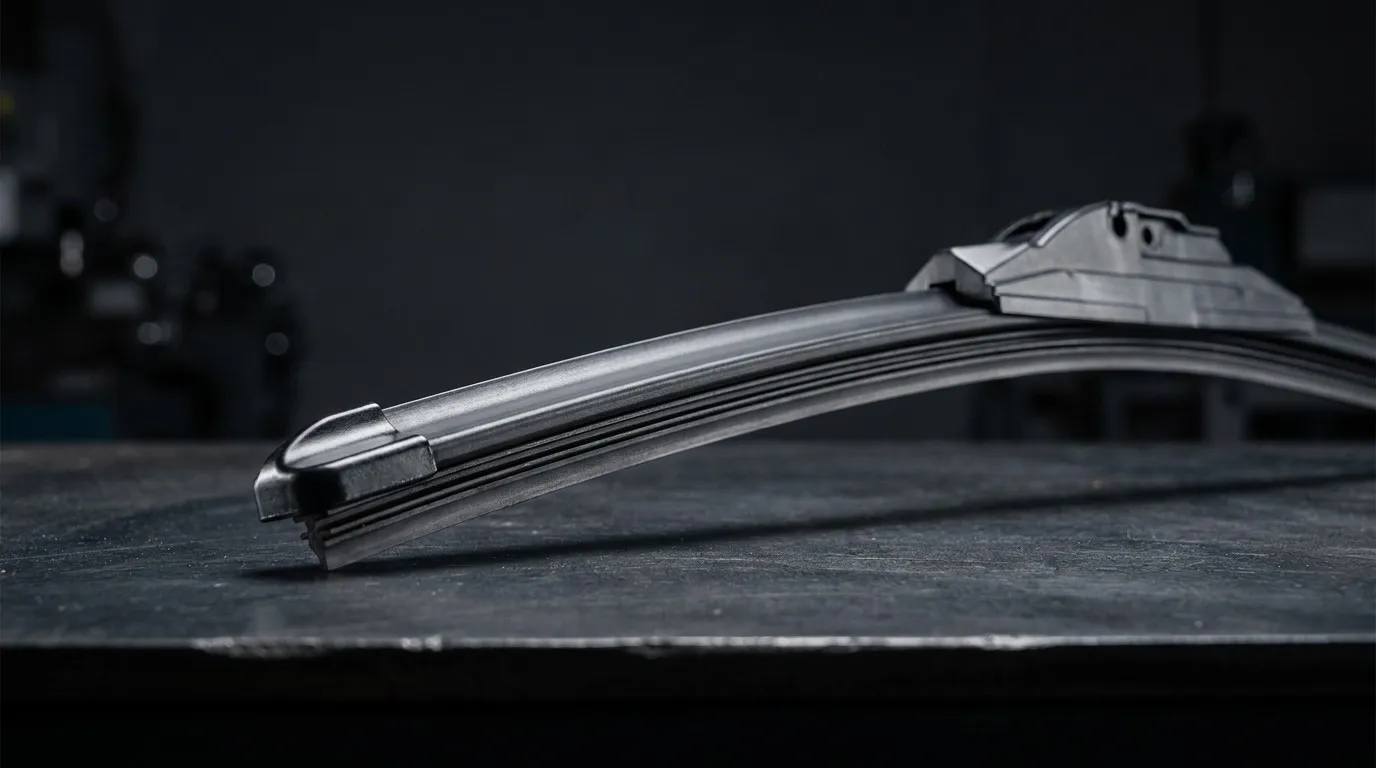
In the automotive aftermarket, wiper blades are often dismissed as simple commodities. However, for shop owners and fleet managers, wiper quality is a direct driver of comeback rates, labor costs, and long-term customer trust. This brief explores the material science and structural engineering that set Fartilo blades apart.
For distributors and repair chains evaluating wholesale wiper blade supplier options, these engineering details are the difference between a high-margin product and a costly comeback cycle.
1. Surface Science: Molecular-Level Bonding vs. Spray Coatings
The rubber compound is the heart of the wiper, but the surface finish determines its performance. There are two distinct paths in the industry:
- Industry-Standard Graphite: Our A-grade graphite treatment creates a microscopic film that reduces friction, ensuring smooth, chatter-free operation. This is the baseline for professional-grade performance that meets OE standards.
- PTFE Vapor Deposition: For high-performance needs, we utilize PTFE molecular fusion. Unlike traditional surface sprays that wear off in weeks, our vapor deposition process bonds PTFE molecules directly into the rubber matrix.
- UV Protection: PTFE is chemically inert, providing a permanent shield against the UV radiation that causes cheap rubber to harden and crack.
- Silent Performance: Because the PTFE is fused into the rubber, it does not flake off. The result is the "dead quiet" wipe your customers expect from a premium service.
2. Structural Engineering: Pressure Distribution and Aerodynamics
The challenge in wiper design is applying uniform pressure across a curved windshield. Our beam wiper blades solve this with pre-tensioned memory steel and aerodynamic spoilers — while our conventional wiper blades offer bridge-system rigidity for heavy-duty commercial applications.
- Symmetric Skeleton: Our internal memory-steel plates are tensioned to create a perfect pressure curve, ensuring consistent contact from the center of the blade to the tips.
- Aerodynamic Spoilers: The integrated spoiler utilizes Bernoulli's principle. At highway speeds, the airflow converts into downward force, preventing the blade from lifting — a common cause of blind spots.
- High-Load Rigidity: For commercial and heavy-duty applications, our bridge-system architecture ensures structural integrity under extreme load.
3. Global Fitment: Eliminating the "Comeback Tax"
In a busy shop, the wrong part is a profit killer. We focus on high-precision fitment to keep your bays moving.
- OE-Spec Adapters: We have developed a modular adapter system based on OE physical CAD data. Whether it is a U-Hook, Side Pin, or Push Button, Fartilo blades provide a secure, "zero-redundancy" lock in under 30 seconds.
- Data-Driven Inventory: Built on 2025 global ACES/PIES standards, our cataloging ensures that if it says it fits, it fits. We help shops cover 95% of mainstream vehicles with 30% fewer parts.
4. Supply Chain Reliability: 24-Month Shelf Life
- Long-Term Asset Protection: Through advanced rubber vulcanization and seal technology, our blades maintain performance stability for 24 months in standard storage.
- Custom Branding: We provide low-MOQ laser marking and custom packaging solutions, helping you build your own brand equity with the same precision-manufactured parts.
Conclusion
Fartilo's engineering approach is built on physics and material science, not marketing fluff. By mastering PTFE molecular bonding and maintaining sub-millimeter tolerances on fitment data, we provide a professional-grade solution that eliminates friction and maximizes shop efficiency. See why B2B buyers choose Fartilo for supply consistency and fitment support.
Ready to evaluate Fartilo for your shop or fleet? Submit a Wholesale Inquiry →